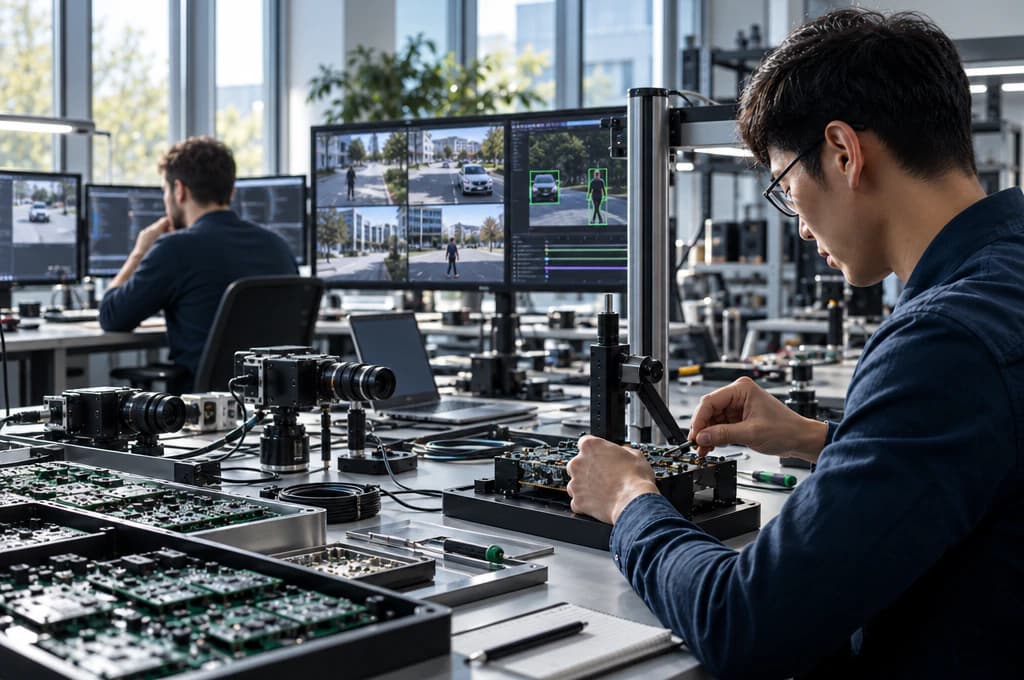
YUAN handles hardware design, driver development, firmware, FPGA logic, and SDK work in-house. The same engineering organization can trace an integration issue from the board through the software stack.
About YUAN
Founded in Taipei in 1990 and listed on the Taipei Exchange as 5474, YUAN High-Tech has spent more than three decades engineering video capture. Its work now extends from capture cards to edge-computing platforms for industrial vision.
YUAN was founded in Taipei in 1990, when bringing a video signal into a computer was a difficult engineering problem.
The company built its business on image-capture boards that turn SDI and HDMI feeds into usable data, then grew into a global provider of capture modules. Its work still centers on four functions: acquisition, conversion, streaming, and analysis.
The heritage shows in today's catalog: 366 products across 45 series and five families. The range covers PCIe and USB capture cards from HD to 8K60, 12G-SDI and HDMI 2.0 converters, and AV-over-IP codecs for SDVoE, NDI, Dante AV, and SRT. YUAN's R&D team designs the hardware and develops the drivers, firmware, FPGA logic, and SDKs in-house. That integration supports deployments in broadcast galleries, operating rooms, and roadside cabinets.
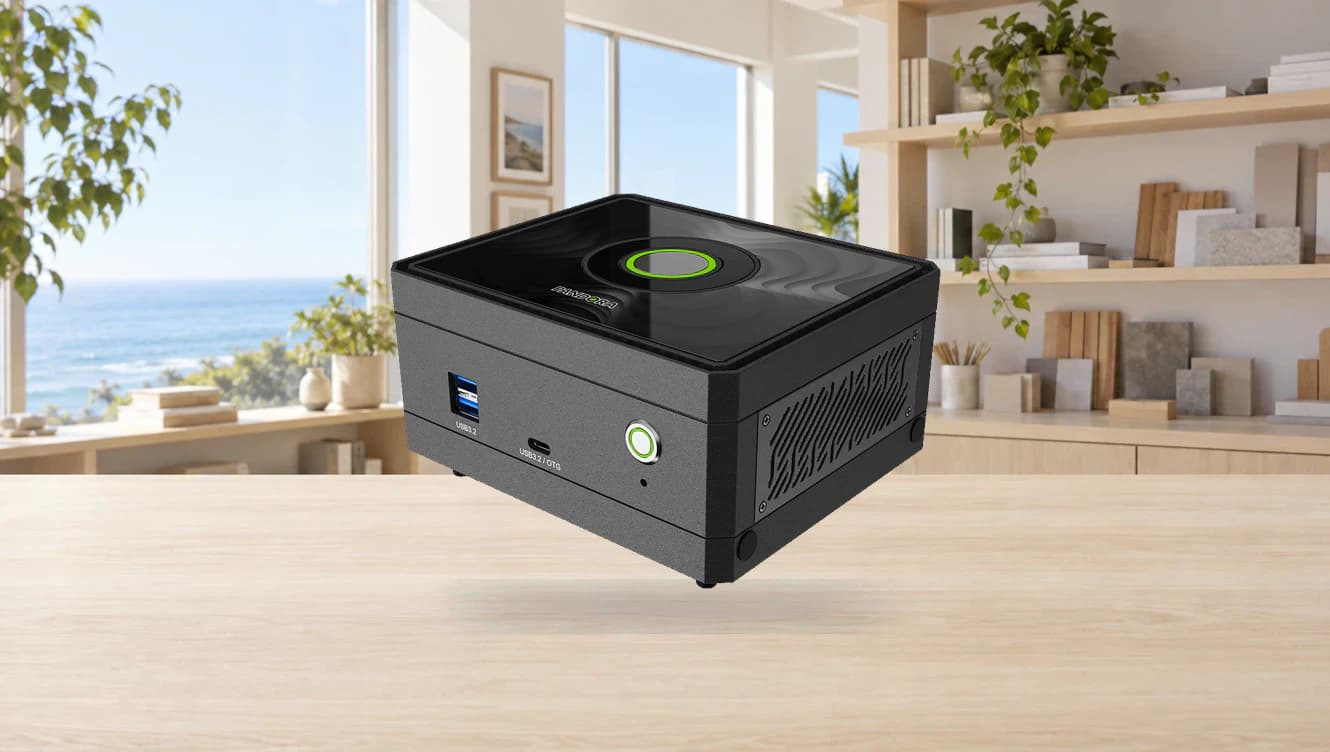
YUAN later added edge inference to the capture pipeline. As a strategic NVIDIA partner, the company developed VPP systems with up to 275 TOPS of AI compute on the VPP6N0-MB, Pandora developer kits, and the NexVDO SDK. YUAN reports microsecond-scale capture latency in selected tested configurations; teams should measure the complete ingest-to-analysis path for their own hardware and workload. The portfolio covers nine application areas, including smart cities and precision agriculture.
YUAN's NVIDIA portfolio covers Jetson Orin, Jetson Thor, IGX, and Holoscan Sensor Bridge. Related work includes smart-healthcare collaboration with Foxconn and AI-assisted ultrasound screening with National Taiwan University Hospital. The company's stated goal is to lead industrial vision computing and shorten the path from NVIDIA silicon to deployed products.
Milestones
2025
The EYE-I AI camera is honored in the Best Smart Manufacturing category at the 2025 EE Awards.
2026
YUAN launches its Holoscan Sensor Bridge line for synchronized, high-bandwidth sensor input to NVIDIA edge-AI pipelines. End-to-end latency depends on the complete sensor, bridge, network, compute, and software configuration.
2026
With National Taiwan University Hospital and the Good Liver Foundation, YUAN deploys 50 Jetson-powered iGood Liver AI ultrasound systems to rural and underserved clinics. The systems assist frontline physicians during screening.
2026
With production platforms already shipping on Jetson AGX Thor T5000, YUAN announces development for the new Jetson T3000 and T2000 modules. The portfolio is intended to use one Blackwell-architecture software stack across deployment sizes.
2 / 2
Values
YUAN handles hardware design, driver development, firmware, FPGA logic, and SDK work in-house. The same engineering organization can trace an integration issue from the board through the software stack.
Awards
Share the product category, integration requirement, and project stage with the YUAN USA product team.
Send partnership requirements