Technology NewsNovember 27, 2023
4K60 encoding with AI-generated stream metadata.
YUAN pairs SC710 capture with NVIDIA Jetson Orin NX for 4K60P capture, AV1 encoding, and AI-generated stream metadata.
Challenge
4K production increases storage, conversion, and network requirements. Footage also needs metadata before editors can search and reuse it. Running analysis during encoding can add that metadata without a separate post-processing pass.
Solution
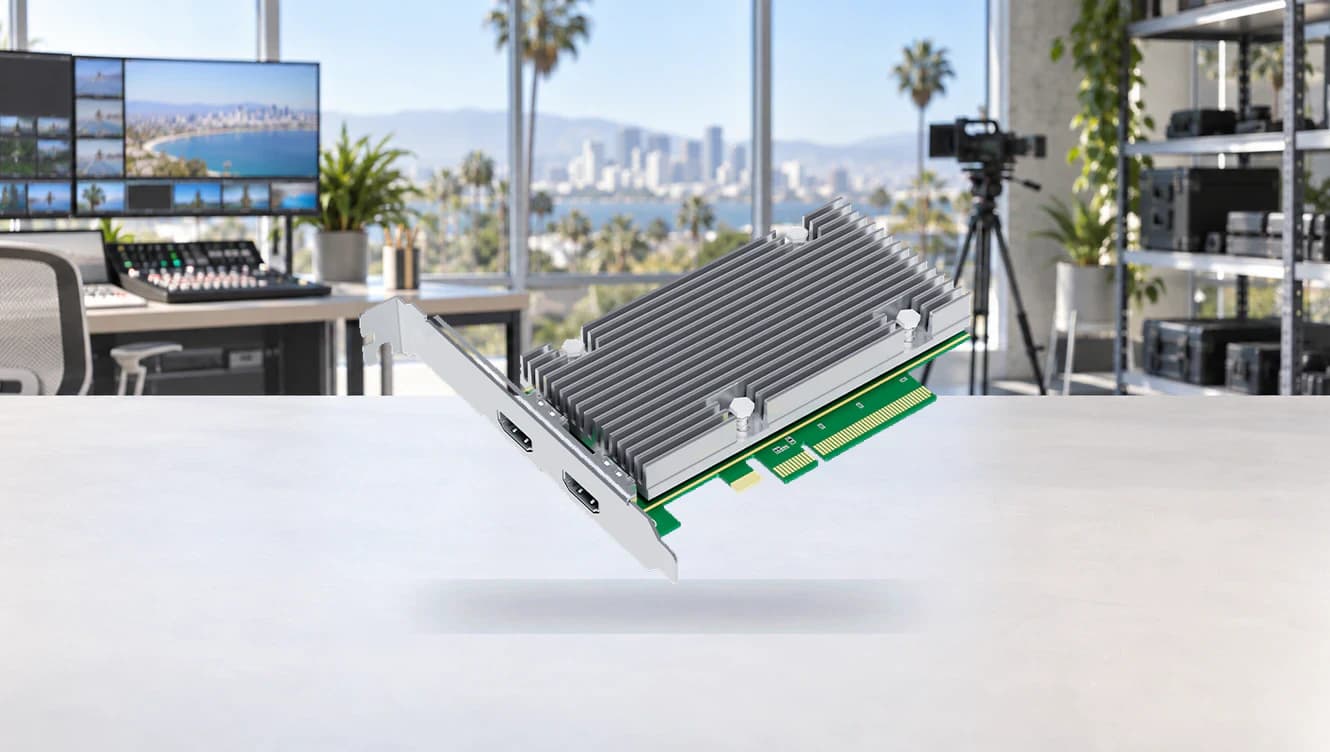
The encoder pairs NVIDIA Jetson Orin NX with YUAN SC710 capture cards. YUAN lists support for 4K60P capture, 4:4:4 chroma subsampling, 10-bit depth, VANC capture, and capture latency as low as 15 microseconds with NVIDIA GPUDirect RDMA. Orin NX provides AV1 encoding, while the NexVDO SDK supports RTSP, RTMP, TS, NDI, SRT, Dante AV, and SkyLink X transport.
With 70 or 100 TOPS on the selected Orin NX module, the encoder can run video-analysis models while it encodes. Stream Information Extraction writes analysis results and timestamps into stream metadata so post-production systems can search for marked segments.
Key benefits
AV1 can reduce bitrate relative to H.265 at a comparable quality setting. The NexVDO SDK supports NDI, SRT, Dante AV, and CBR streaming for stable network rates. Integration teams should validate image quality, bitrate, latency, and metadata compatibility with their production equipment.
Related
More from the newsroom.

Technology News · June 2, 2026
Foxconn presents healthcare robotics developed with YUAN and NVIDIA.
Read the storyTalk to the team behind the story.
Technical questions, review hardware, and interview requests go through YUAN communications.
Contact PR